
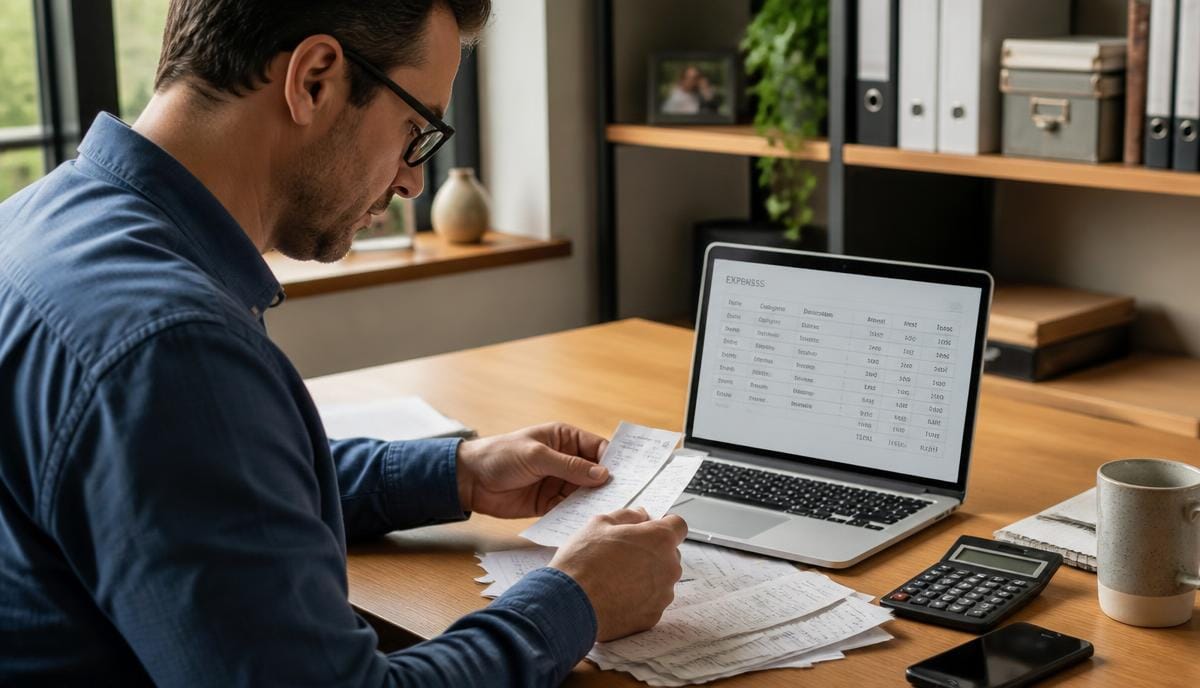
Self-employed allowable expenses that sole traders often miss include bank charges, subscriptions, training, home working costs, mileage, phone and broadband, specialist clothing, website hosting, marketing, advertising, accountancy fees, postage and personal equipment. Claiming them reduces your taxable profit, which means a lower tax bill.
Every year, sole traders across the UK pay more tax than they need to, simply because they miss allowable expenses when completing their self assessment tax return.
Claiming the right expenses reduces your taxable profit, which means a lower tax bill, yet many genuinely deductible costs get overlooked because they do not feel like obvious business expenses.
At R&R Chartered Certified Accountants, we help sole traders across Blackburn and the North West make sure their self assessment returns are accurate and that they are not leaving money on the table. Here are 15 commonly missed allowable expenses worth checking before you file.
1. Can You Claim Bank Charges and Interest on Business Borrowing?
If you have a business bank account with monthly fees, or you pay interest on a business loan or credit card, these costs are generally allowable. They are easy to miss because the charges feel like background noise rather than a deliberate expense.
2. Can You Claim Professional Subscriptions and Memberships?
If you pay an annual fee to a trade body, professional association, or relevant magazine subscription that relates to your trade, this is usually deductible. It is easy to forget when these payments are set up as automatic annual renewals you barely think about.
3. Can You Claim Training That Maintains Your Existing Skills?
Sole traders sometimes assume only formal qualifications count, but short courses, workshops, and relevant books or resources that keep your existing skills current can usually be claimed too.
4. Can You Claim a Proportion of Home Working Costs?
If you work from home some of the time, you can claim a proportion of costs such as heating, electricity, council tax, and mortgage interest or rent, based on the proportion of your home used for business and the time it is used that way.
5. What Is HMRC’s Simplified Home Working Flat Rate?
As an alternative to calculating actual home costs, HMRC’s flat rate based on hours worked from home each month is easier to apply. It is worth calculating both methods to see which gives you the better outcome.
6. Can You Claim Business Mileage Using Simplified Rates?
If you use your own vehicle for business journeys, you can generally claim using HMRC’s simplified mileage rates. Many sole traders only log obvious trips and forget smaller journeys such as picking up supplies or attending networking events.
7. Can You Claim Mobile Phone Costs Used for Business?
The business proportion of your mobile phone bill, covering calls, texts, and data used for work purposes, is a commonly missed allowable expense.
8. Can You Claim a Proportion of Broadband Costs?
If you work online, a reasonable proportion of your broadband costs can usually be claimed, in the same way as other home working expenses.
9. Can You Claim Specialist Clothing or Protective Equipment?
Clothing or equipment specific to your trade, such as protective wear, uniforms, or specialist safety gear, is generally allowable, though everyday clothing is not.
10. Can You Claim Website Hosting and Domain Costs?
The cost of hosting and maintaining a business website, including domain renewal fees, is a straightforward allowable expense that is often overlooked simply because it renews automatically each year.
11. Can You Claim Business Cards and Printed Marketing Materials?
Business cards, flyers, and other printed marketing materials that promote your business are deductible costs, yet these small purchases often get lost among personal receipts.
12. Can You Claim Paid Social Media and Online Advertising?
Costs for paid advertising on social media platforms or search engines, when used to promote your business, are generally allowable and often missed because the payments are automated monthly charges.
13. Can You Claim Accountancy and Bookkeeping Fees?
The cost of having your self assessment return prepared, or getting bookkeeping support throughout the year, is itself an allowable expense and reduces your taxable profit.
14. Can You Claim Postage and Stationery?
Everyday costs like postage, printing, envelopes, and general office stationery are allowable, but they are easy to overlook because each individual cost feels too small to bother claiming.
15. Can You Claim for Using Personal Equipment for Business Purposes?
If you use personal equipment such as a laptop, tablet, or camera partly for business, you can generally claim the business proportion of the cost, even if you also use the item personally.
Frequently Asked Questions
You can claim costs incurred wholly and exclusively for your business, including bank charges and business loan interest, professional subscriptions, relevant training, a proportion of home working and broadband costs, business mileage, the business share of your mobile phone bill, specialist clothing, website hosting, advertising, accountancy fees, postage and stationery.
Yes. You can either claim a proportion of your actual household costs such as heating, electricity, council tax and rent or mortgage interest based on the space and time used for business, or use HMRC’s simplified flat rate based on the hours you work from home each month. It is worth calculating both.
You can claim the business proportion of both. If your phone or broadband is used for a mix of personal and business use, work out a fair and reasonable business percentage and keep a note of how you arrived at it.
Most sole traders use HMRC’s simplified mileage rates, claiming a set amount per business mile rather than working out actual running costs. Keep a log of every business journey, including short trips for supplies or networking events.
Keep receipts, invoices, bank and card statements, and a record of any apportionment calculations for mixed use costs. HMRC generally expects self-employed records to be kept for at least five years after the 31 January filing deadline for that tax year.
The Bottom Line
Missing allowable expenses is one of the most common and avoidable reasons sole traders pay more tax than they need to.
From bank charges and subscriptions to home working costs, vehicle mileage, and everyday running costs, small oversights add up to a real difference in your final tax bill.
If you want a second opinion on whether you are claiming everything you are entitled to, or need support getting your self assessment return right, R&R Chartered Certified Accountants is here to help.
Get in touch today to book a review and check you are not paying more tax than you need to.
Tax figures checked by Rehan Razzaq FCCA on 8 October 2026 for the 2026/27 tax year.
This article is general guidance for UK businesses and individuals and does not constitute personal financial or tax advice. Rules, thresholds and individual circumstances vary — always confirm your specific position with a qualified accountant before acting.

Rehan Razzaq, FCCA
Founder, R&R Chartered Certified Accountants
ACCA Chartered Certified and Xero Certified Advisor, helping UK small businesses and landlords with accounts, tax and financial planning since 2021.
We work with clients right across Lancashire and the North West. If you are looking for accountants in Blackburn, or a local accountant in Chorley or accountant in Darwen, our team is a short drive away.
Think You Are Missing Expenses on Your Tax Return?
Book a meeting and we will review your records, check every allowable expense you are entitled to claim, and help get your self assessment return right first time.
For the official position, see HMRC’s list of allowable expenses if you are self-employed on GOV.UK.
Related Articles
Bookkeeping for Opticians: Stock, NHS Payments and VAT
Cash Basis vs Accrual Accounting: Which Should Your Small Business Use?
Salary vs Dividends in 2026/27: How Should Limited Company Directors Pay Themselves Now?
Payroll for Small Businesses in the UK: PAYE, Pensions and Employment Allowance